
India’s ₹11.2 Trillion Capex to Anchor Smart Metering Shift
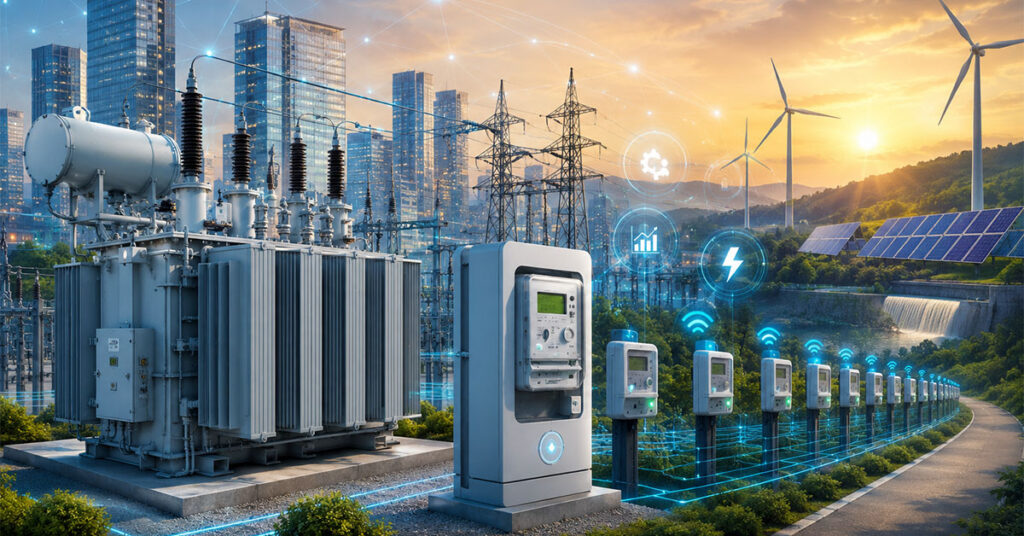
India’s power distribution sector is preparing for a transformative investment cycle, with a proposed ₹11.2 trillion (approximately $133 billion) distribution capital expenditure (capex) plan through 2035. The initiative is aimed at modernizing the country’s electricity distribution infrastructure, accelerating smart metering adoption, strengthening grid reliability, and improving operational efficiency across the power ecosystem.
A major focus of the programme is the deployment of nearly 35 crore smart meters by 2035, including over 10 crore installations targeted by FY27. The initiative also seeks to reduce Aggregate Technical & Commercial (AT&C) losses, improve billing efficiency, and upgrade substations and service stations to meet the growing demand for reliable and sustainable power.
A Major Push Towards Smarter Power Distribution
India’s distribution network is undergoing a significant shift from conventional infrastructure towards digitally enabled, intelligent power systems. The proposed capex cycle is expected to create substantial opportunities across: Transformers and substations, Smart metering infrastructure, Power electronics and automation, Cables and conductors, Renewable energy integration, and Grid digitalization technologies.
The initiative aligns closely with India’s broader infrastructure expansion plans and clean energy transition goals, while also supporting the government’s “Make in India” vision through increased indigenization and interoperability.
Tackling Losses and Meeting Rising Demand
India has made measurable progress in reducing AT&C losses, with the national average improving to 15.04% in FY25. However, this remains above the Revamped Distribution Sector Scheme (RDSS) target range of 12–15%.
Performance varies significantly across states. Kerala and Gujarat have achieved single-digit AT&C losses, reflecting stronger operational efficiency and better infrastructure management. In contrast, states such as Madhya Pradesh and Punjab continue to report losses exceeding 19%, highlighting uneven implementation and persistent inefficiencies within the sector.
At the same time, India’s energy demand is projected to grow at 6–6.5% annually over the next five years. This growth will require robust distribution infrastructure capable of handling rising electricity consumption while integrating increasing volumes of renewable energy into the grid.
Overall, India’s power sector is estimated to offer investment opportunities worth nearly ₹40 lakh crore over the next decade.
Roadmap for Operational Transformation
The sector’s long-term roadmap focuses not only on infrastructure deployment but also on achieving measurable operational outcomes.
Key initiatives include:
- Deployment of nearly 35 crore smart meters by 2035
- Expansion of SCADA-enabled towns and digital grid infrastructure
- Increase in service stations from around 45,000 to 55,000 by 2030
- Greater emphasis on interoperability and indigenous manufacturing under “Make in India”
- Adoption of AI and machine learning for predictive maintenance, loss reduction, demand forecasting, and revenue optimization
According to the Central Electricity Authority (CEA), the industry is now moving beyond the mere installation of smart meters towards outcome-based implementation focused on improved billing efficiency, reduced losses, and enhanced grid reliability.
More than 6.5 crore smart meters have already been installed across the country, with the government accelerating efforts to cross 10 crore installations by FY27.
Challenges in Implementation
Despite the strong momentum, several challenges remain in the large-scale rollout of smart distribution infrastructure. Which are listed below:
Deployment Hurdles
Implementation delays, logistical issues, and consumer resistance in certain states continue to slow deployment. Greater public awareness and stronger communication strategies will be essential for wider acceptance.
Interoperability Concerns
Ensuring seamless compatibility across hardware and software platforms from multiple vendors remains critical. Standardization will be necessary to avoid vendor lock-ins and ensure long-term operational flexibility.
Capacity Building for Discoms
Distribution companies (Discoms) will need to strengthen technical capabilities and workforce expertise to effectively manage increasingly data-driven and digitally integrated systems.
Building the Future Grid
India’s ambitious distribution capex programme represents more than just infrastructure expansion. It marks a strategic transition towards a smarter, more resilient, and digitally connected power ecosystem.
With growing emphasis on smart metering, AI-enabled grid management, renewable energy integration, and domestic manufacturing, the sector is laying the foundation for a future-ready electricity network capable of supporting India’s rapid economic and industrial growth.
About Shirdi Sai Electricals Limited
Shirdi Sai Electricals Limited (SSEL) was founded in the year 1994 at Kadapa in Andhra Pradesh. It was established by Mr N Visweswara Reddy, who currently serves as Chairman and Managing Director (CMD) for the organisation. The organisation was initially served as transformer repair unit, but it has metamorphosed into one of the largest transformer manufacturing companies in India over three decades.
SSEL has grown into reliable energy solutions provide in India and across the world over the last three decades. It currently operates 5 manufacturing facilities with different product portfolio. It manufactures Power and Distribution Transformers. SSEL products are exported to over 40 countries across the world. It has state-of-the-art manufacturing facilities located at Kadapa in Andhra Pradesh, Naini in Uttar Pradesh and Kancheepuram in Tamilnadu.